
OpenAI's LifeVal measures AI on everyday errands, from childcare to government forms
GPT-6 Astra scored 100% on 10 of the 16 everyday tasks OpenAI shared. Tasks were chosen from a 3,995-person survey and time-use studies.

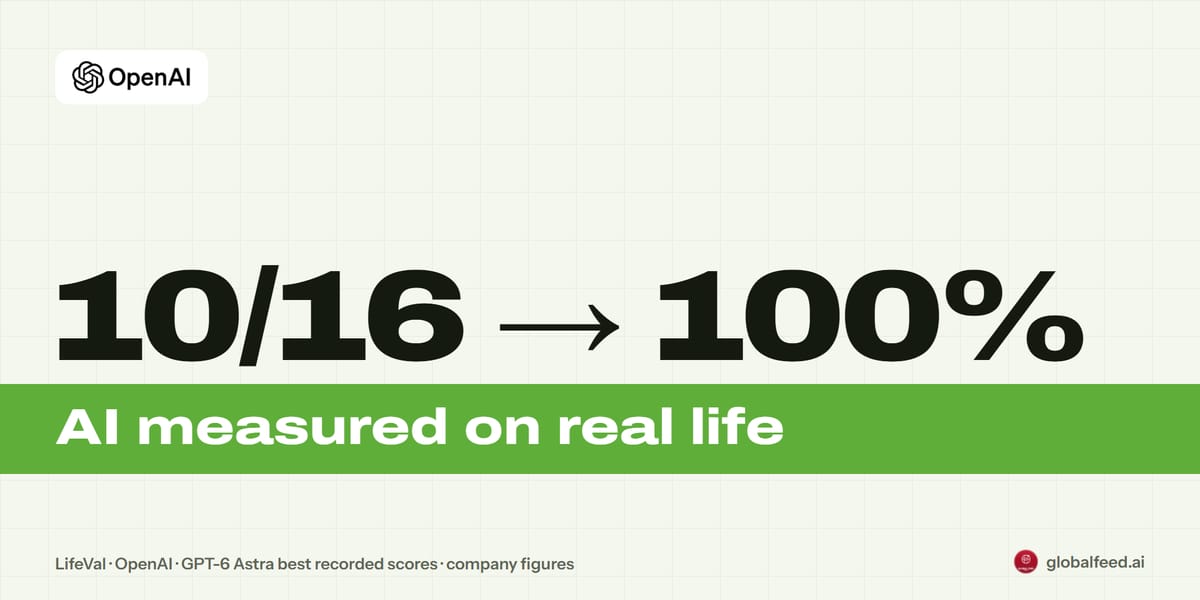
Most AI benchmarks measure whether a model can pass a PhD exam or crack a hard maths problem. But what people actually need is different: finding the right kindergarten after a move, filling out a benefits application without missing a document, ordering groceries without blowing the budget, putting together a week of meals for a parent just diagnosed with diabetes. On 2 November OpenAI published a new benchmark that measures exactly this: LifeVal. Its strongest model, GPT-6 Astra, scores 100% on 10 of the 16 everyday tasks OpenAI shared.
What this is about
By OpenAI’s figure, more than a billion people use ChatGPT every week. Most of them are not looking for academic brilliance; they want everyday life to get easier. The company says it plainly: to be a truly helpful personal assistant, advice and chat are not enough, the model has to take the actions that get things done. Making a list of kindergartens is one thing; gathering enrollment details and handing you the two decisions that are yours to make is another.
That is LifeVal’s argument: benchmarks should move from “what does the model know” to “what does the model do for people’s lives”. OpenAI says it has used the benchmark over the past year to measure and improve its models on everyday tasks.
How the tasks were chosen
This is what makes LifeVal interesting. OpenAI did not invent the task list; it started from two large studies of how people spend their time: the official American Time Use Survey (ATUS) and the cross-country Multinational Time Use Study (MTUS). Together they give a detailed catalogue of what different groups do at different times of day and across seasons.
OpenAI then ran a new, demographically representative survey of 3,995 people, asking a series of questions about each task to find where people most want help from a personal assistant. The resulting areas: caregiving, health, education, household administration, personal finances, shopping and access to government services.
What the model gets done
OpenAI walks through five tasks in detail:
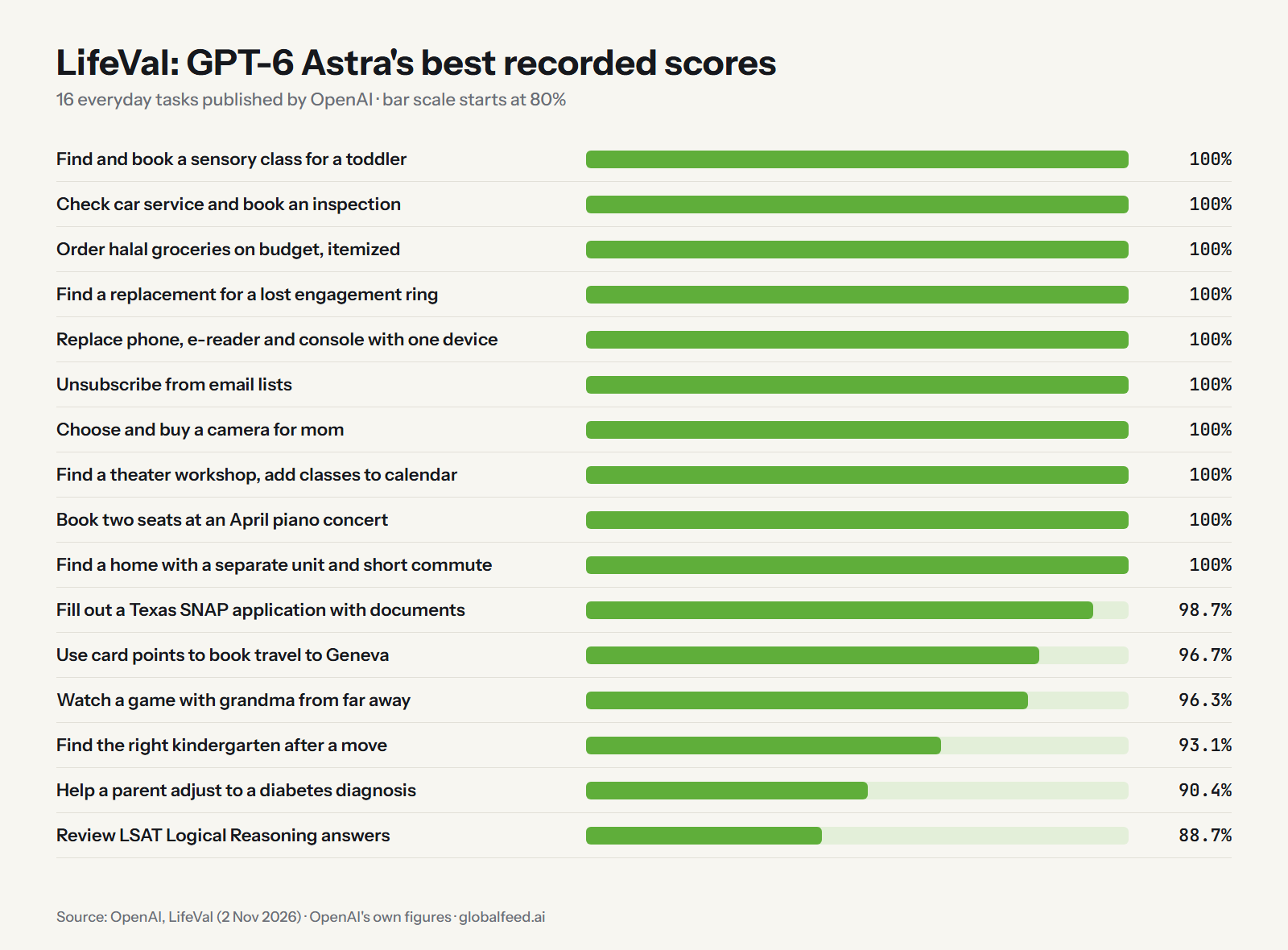
The right kindergarten after a move (93.1%). The user asks to compare kindergartens near a new home. The model narrows it to three, organizes the enrollment details and flags two preferences that are still the user’s call.
Volunteers ahead of a flood (98.0%). A community volunteer force is organized for four neighbours who need floodproofing help, with a simple action plan for assessing the sites.
A new home for the family (100%). The search is for a home in Luzerne County within budget, with a separate living unit and a short commute after school drop-off. The model finds the one home that fits, calculates the transfer tax and adds the deed to a records cart for review.
Watching a game with grandma from afar (96.3%). The model sets up the easiest viewing arrangement, with a backup if the stream fails.
Helping a parent with a new diabetes diagnosis (90.4%). A first-week plan with meals, reminders and questions for the care team, which the model suggests reviewing together before sharing.
The other tasks come from the same world: finding and booking a sensory class for a toddler, checking when a car is due for service and booking an inspection before a road trip, ordering halal groceries for three favourite meals within budget and itemizing them in a spreadsheet, finding a replacement for a lost engagement ring from a photo and its diamond report, unsubscribing from email lists. All of these have a best recorded score of 100%. Filling out a Texas SNAP application with supporting documents scores 98.7%, booking travel to Geneva with credit card points 96.7%, and reviewing LSAT Logical Reasoning answers 88.7%.
One detail stands out: in most examples the model leaves the final step to the user. It adds the deed to the cart but doesn’t buy, fills the application but doesn’t submit, drafts the plan and asks “want to review it together?” before sharing.
The capability behind it
OpenAI ties the progress to a year of training: its models became faster, more capable and better aligned on browser use, computer use and connectors to services like calendars and email. According to the company, these capabilities move ChatGPT from a chat tool toward a truly agentic personal assistant.
What to keep in mind
LifeVal is OpenAI’s own benchmark, and the scores on the page are “best recorded” GPT-6 Astra scores; the page does not detail how many attempts that covers or how the scores are computed. There is no comparison with other companies’ models, and the full task set has not been published. Still, the direction matters: measuring AI on real chores like finding childcare and filling out benefit forms, instead of exam questions, is an idea the whole industry should take seriously.
Sources: OpenAI LifeVal, OpenAI on X, American Time Use Survey, Multinational Time Use Study

