
Siri on Chinese iPhones will hand some questions to Alibaba's Qwen
Apple Intelligence reaches China two years late. Testing starts 4 November, with Qwen in Siri, Writing Tools and Visual Intelligence.

Apple Intelligence is coming to China, one of the iPhone’s biggest markets, two years late, and it is bringing Alibaba’s Qwen with it. According to the announcement on Apple’s China newsroom on 31 October, users in China will be able to use some Siri requests, Writing Tools and Visual Intelligence through Qwen. Testing opens with the latest iOS developer beta on 4 November, and the features ship to everyone with iOS 27.3 in December. Alibaba announced the partnership from Hangzhou the same day. CEO Eddie Wu said in a statement that Alibaba was delighted to partner with Apple.
What this is about
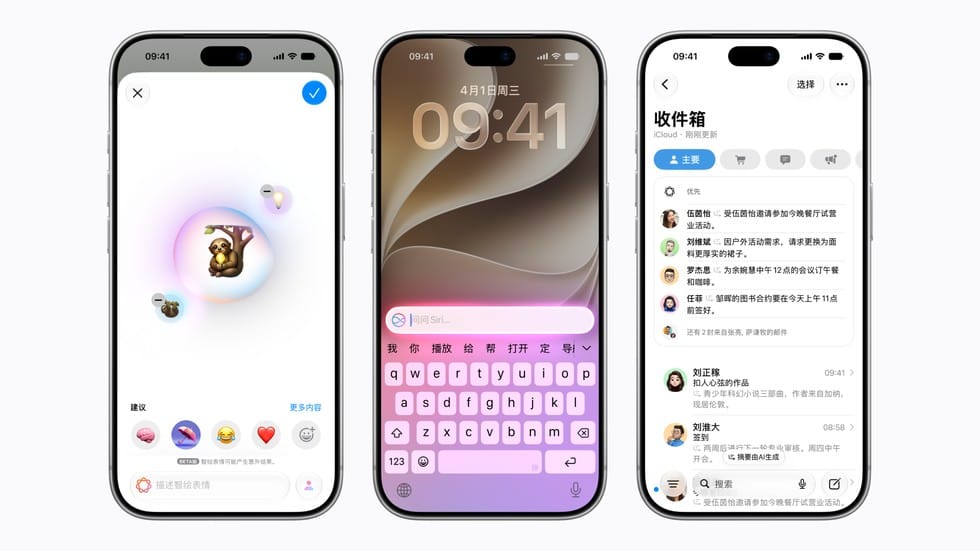
Apple Intelligence is the name of the AI feature set Apple introduced in 2024: rewriting text, summarising notifications, removing objects from photos, making your own emoji. Outside China, when Siri cannot answer something it can ask ChatGPT with the user’s permission. In China, foreign AI services need the local regulator’s approval, so Apple Intelligence never launched there. Apple’s answer is to run the core features on its own models and turn to Alibaba’s Qwen where outside knowledge is needed.
Where exactly Qwen will run
Apple’s announcement places Qwen in three spots. Siri will draw on Qwen’s broad knowledge for certain requests, and users can ask about photos and documents such as PDFs and presentations. In the system-wide Writing Tools, a “Compose” option lets Qwen write original text from scratch. Visual Intelligence, which tells you about objects and places seen through the iPhone camera, will use Qwen’s text and image understanding. Signing in with a Qwen account or with Sign in with Apple is enough.
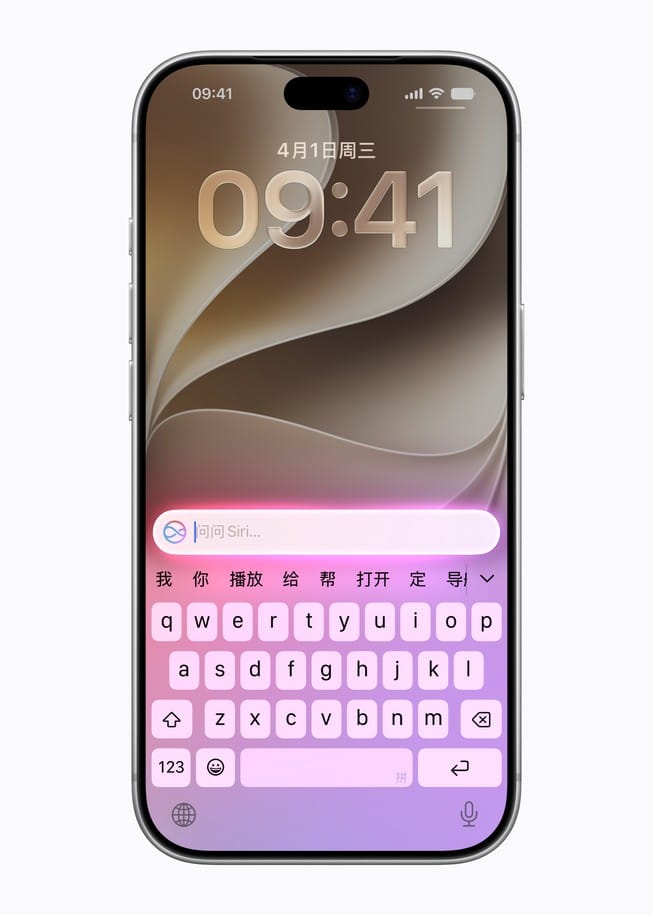
Apple’s own models run the rest: Live Translation in Messages, FaceTime and phone calls, rewriting and summarising, Clean Up and natural-language search in Photos, Genmoji, Priority Messages, mail and notification summaries, Smart Reply, audio summaries in Notes and calls, and Type to Siri. The announcement states that Siri AI and the next-generation features shown at WWDC 2026 are not part of this update. Other devices will follow “after necessary approvals”.
Eligibility is also spelled out. According to reports in the Chinese press, the features run on iPhone 15 Pro and Pro Max, iPhone 16 and later, and iPhone Air. The device and Siri language must be English or Simplified Chinese, and the phone must have been bought in China, or both the device location and the Apple Account region must be set to China.
Where the data goes
This is the question people ask most, and Apple’s announcement says nothing about it. It does not say whether requests are processed on the phone, on Apple’s Private Cloud Compute servers or in Alibaba’s cloud. According to Alibaba’s statement, as reported by Xinhua, Apple asks for the user’s consent before a question, document or image is sent to Qwen, the feature is opt-in, and requests and responses will not be used to train Alibaba’s models. Technical details behind these commitments have not been shared yet.
A two-year road
The first sign came in February 2025, when Alibaba chairman Joe Tsai confirmed that Apple had picked Alibaba for China. In May 2025 The New York Times reported that White House officials and members of the House select committee on China had questioned Apple executives about the deal. In March 2026 Apple Intelligence briefly appeared on some Chinese iPhones before approval and was pulled. On 15 July 2026 China’s cyberspace regulator, the CAC, registered Apple Intelligence. Around the same time Baidu confirmed to TechCrunch that it was working with Apple on Apple Intelligence in China. Baidu is not mentioned in the latest announcement.
The stakes are high for Apple. As reported by TechCrunch, its Greater China revenue rose 28% to $20.5 billion in fiscal Q2 2026, while local rivals such as Huawei have long had AI features on their phones. For Alibaba, getting Qwen into the system of one of the world’s best-selling phones carries the ground it won with developers through its open models over to consumers.
The first chance to see how it all works comes with the developer beta on 4 November. Which Qwen version is used and on which servers requests are processed remain questions neither company has answered so far.
Sources: Apple China newsroom, Xinhua, Global Times, Asia News Network, Reuters, TechCrunch

