
Google ran a method that cuts quantum errors 40-fold on its Willow chip for the first time
Magic state cultivation filters out the clean states quantum computers need for universal computing. Published in Science, it brought errors to about 1 in 10,000.

Quantum computing has had a known headache since 2004: producing a special “fuel” the machine needs to do any computation is so expensive it could eat up to 95% of a quantum computer’s resources. Google Quantum AI has now run a new, cheaper way to make that fuel on its Willow processor for the first time. According to the study published in Science on 15 October, a method called magic state cultivation cut errors roughly 40-fold, down to about 1 in 10,000.
What this is about
Quantum computers are fragile; the smallest noise ruins a calculation. Large machines will therefore run with error correction, where many physical qubits act as one robust “logical qubit”. The catch is that these protected structures can only do a certain set of “cheap” operations (Clifford gates) natively. Those alone cannot run every quantum algorithm; for truly universal computing you also need an operation like the T gate.
That is where the “magic state” comes in. Think of it as single-use fuel burned to run a T gate: it is made separately and used up when consumed. And it has to be very clean: per the preprint, big jobs like breaking RSA-2048 need error rates around one in ten billion.
The old way and the new way
Distillation. The long-standing method combines many noisy copies into one cleaner copy. It works but is very expensive; much of the processor ends up just making fuel.
Cultivation. Proposed in theory in 2024 by Google researchers Craig Gidney, Noah Shutty and Cody Jones, it works like a filter: a single noisy state is injected into a small code, checked again and again, failed attempts are thrown away, and the survivor is grown into a larger code. The theory paper argued a T state could cost about as much as an ordinary CNOT gate and that distillation “may never be needed”. The Science paper shows the idea on real hardware for the first time.

How it was done
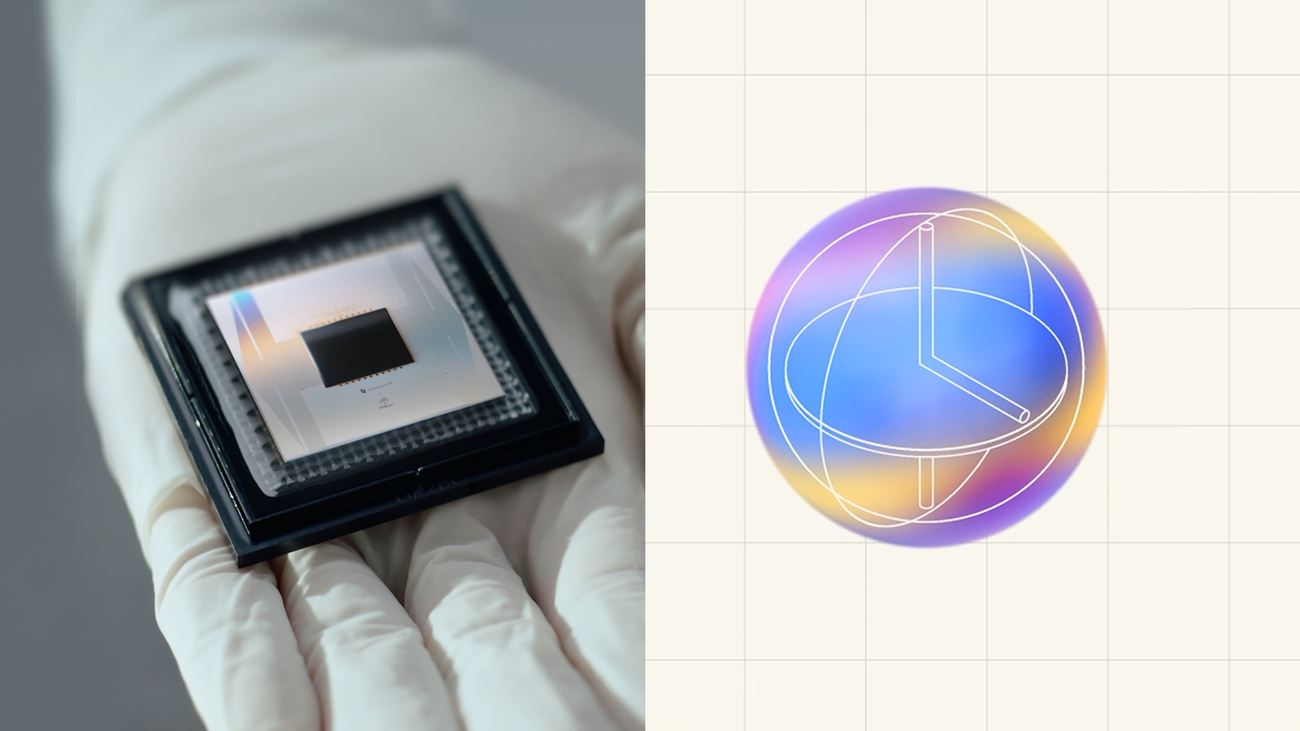
The experiment ran on the 105-qubit Willow processor, with the largest layout using 54 qubits. The magic state was cultivated in a distance-3 “color code” with 7 data qubits. A shot was kept only if no error detector fired. The team also built a new way to measure how clean the state is: “kickback tomography”, which reuses cultivation rounds and needs about 10⁴ shots instead of the roughly 10⁸ of standard tomography. The cultivated state was also “grafted” from the color code into a distance-5 surface-code layout, moving it from one code type to another inside the processor.
Results
Error went from about 4.4×10⁻³ before cultivation to 1 to 2×10⁻⁴ after; per the Science abstract, that is a roughly 40-fold improvement to a fidelity of at least 0.9999. By the team’s estimate, halving hardware noise could bring the same small code to about 2×10⁻⁵.
The cost is stated too: only 8% of attempts pass the filter and are kept, against 76% for injection alone. The grafted distance-5 state showed no extra gain because of idle errors. A real-time T gate, larger distances and better decoders are still to come. There is a long road from 1 in 10,000 to the target of 1 in ten billion, and Google says the method must still be shown at larger scale.
A nice behind-the-scenes note: according to Google’s blog, early data seemed to break the laws of physics. After months of searching, the cause turned out to be electrical drift and temperature noise in the lab.
Why it matters
Everything quantum computers promise, from drug discovery and new materials to cryptography and logistics, depends on the machine running any computation without errors. Making magic states was one of the costliest bottlenecks on that path. Getting clean states through a filter instead of heavy distillation means future quantum computers could do the same work with far less hardware. It is an important step toward large, fault-tolerant quantum computers.
Sources: Science paper, arXiv preprint, Google blog, 2024 theory paper, Quantum error correction

