
Google's medical AI AMIE helped doctors in real clinic visits
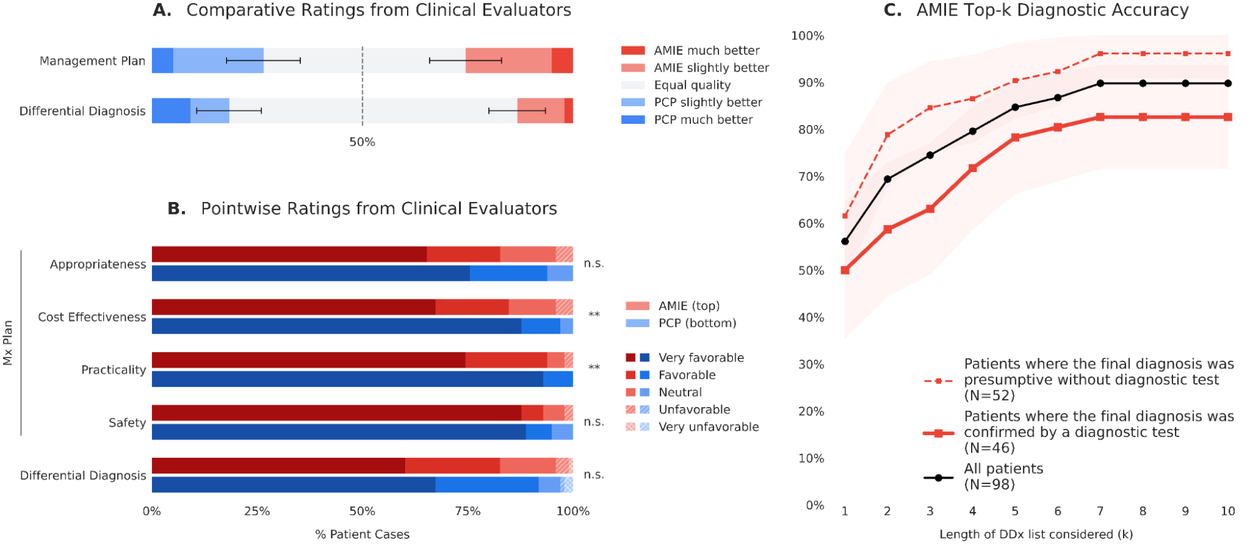
In a study published in The Lancet, AMIE chatted with patients before their visit, helped doctors prepare in 75% of cases and had the final diagnosis on its list 90% of the time.

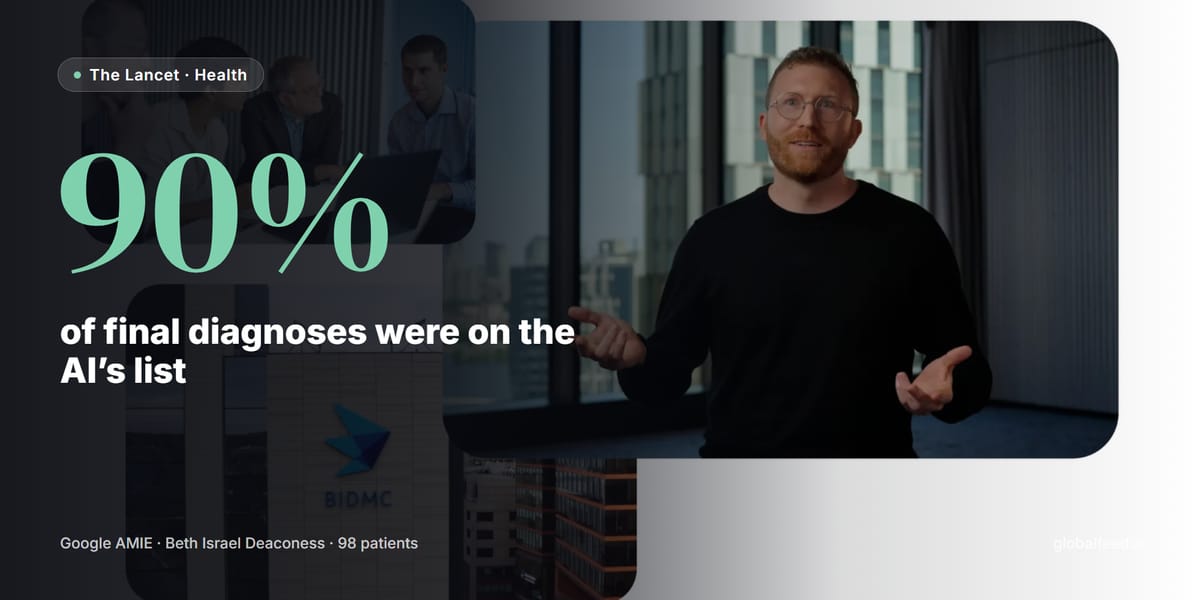
Picture an assistant that, before you see the doctor, listens calmly to your complaint, asks the right follow-up questions and hands the doctor a tidy summary. Google’s medical AI AMIE has now tried exactly that outside the lab, with real patients, and the results are published in one of the most respected medical journals, The Lancet. In a study at Beth Israel Deaconess Medical Center (BIDMC) in Boston, AMIE helped physicians prepare for the visit in 75% of cases, and the patient’s final diagnosis was on AMIE’s list of possible diagnoses 90% of the time. Not a single conversation had to be stopped for safety.
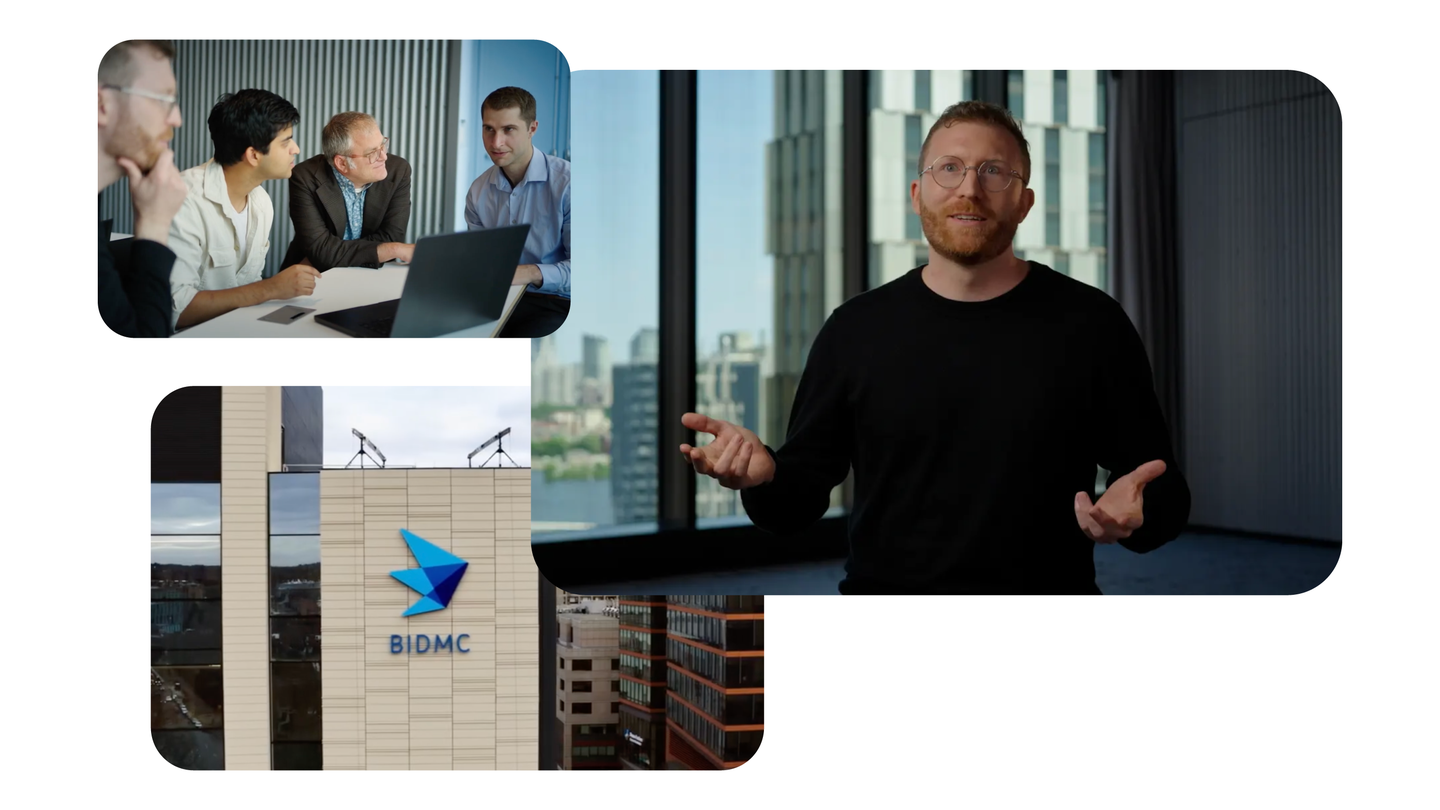
What this is about
In primary care, the doctor’s scarcest resource is time. A large part of a visit goes to taking the history: when the problem started, what else comes with it. AMIE works like a smart intake nurse: instead of a fixed form, it asks follow-up questions that fit what the patient says and writes a short, organized history for the doctor. The goal is to help the doctor start the visit prepared, with the doctor still in charge.
AMIE is not new. In a Nature paper in April 2025, Google compared AMIE with primary care physicians in text-chat consultations with simulated patients. The Lancet study goes a step further: real patients, real appointments, real doctors.
How the study worked
The study ran at BIDMC between April and November 2025. Participants were English-speaking adults with a single complaint and an urgent primary care booking. Within 5 days before their appointment, patients chatted with AMIE by text through a secure link. The doctor read the transcript and AMIE’s summary before the visit.
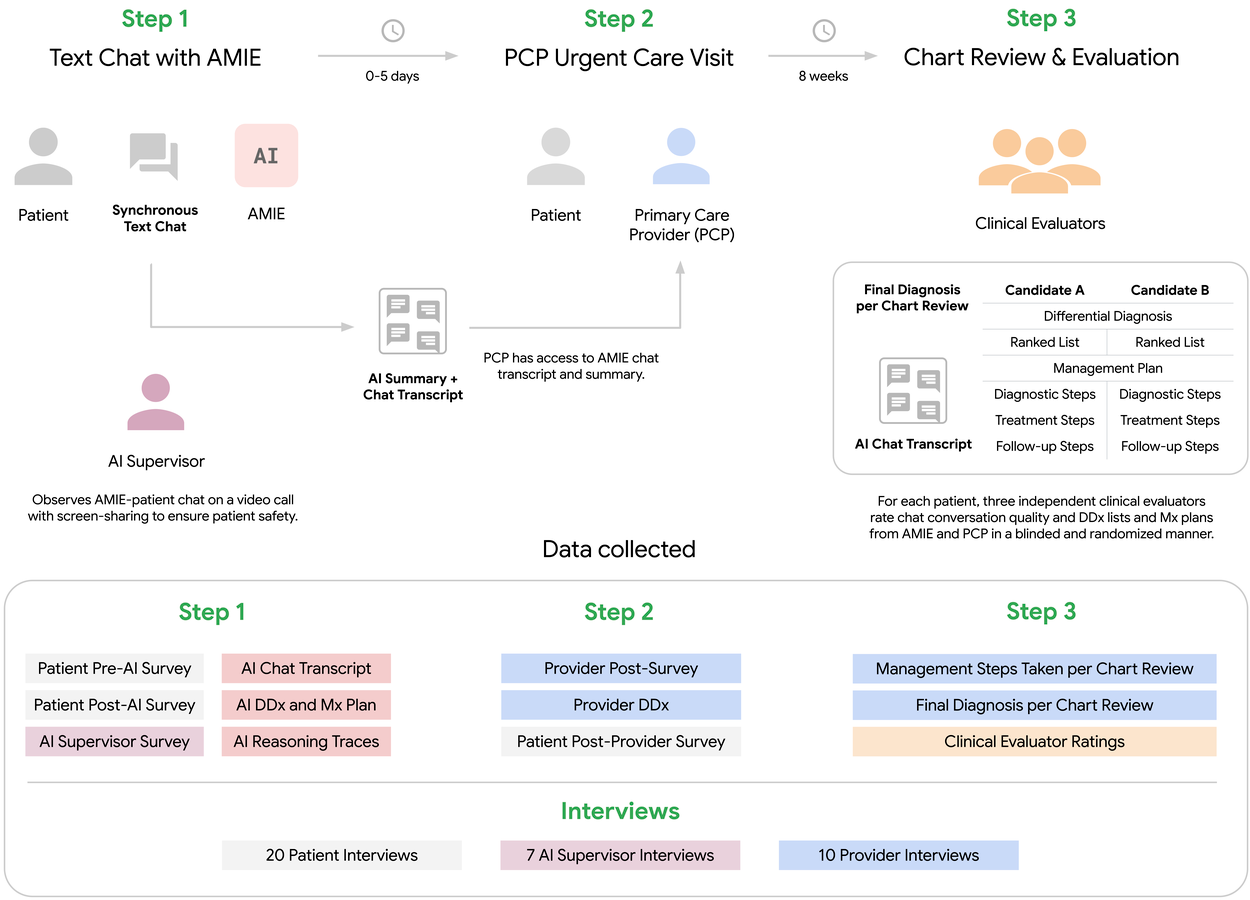
How safety was handled. A physician watched every chat live over a screen-shared video call and could stop it. There were four pre-set stop criteria: risk of harm to self or others, patient distress, potential clinical harm, and the patient asking to stop. 114 people enrolled and 98 completed both the AMIE chat and the doctor visit. No chat had to be stopped.
How results were measured. The final diagnosis was set by chart review 8 weeks after the visit. Three independent clinical evaluators compared AMIE’s and the doctor’s diagnosis lists and management plans without knowing who wrote which.
Results
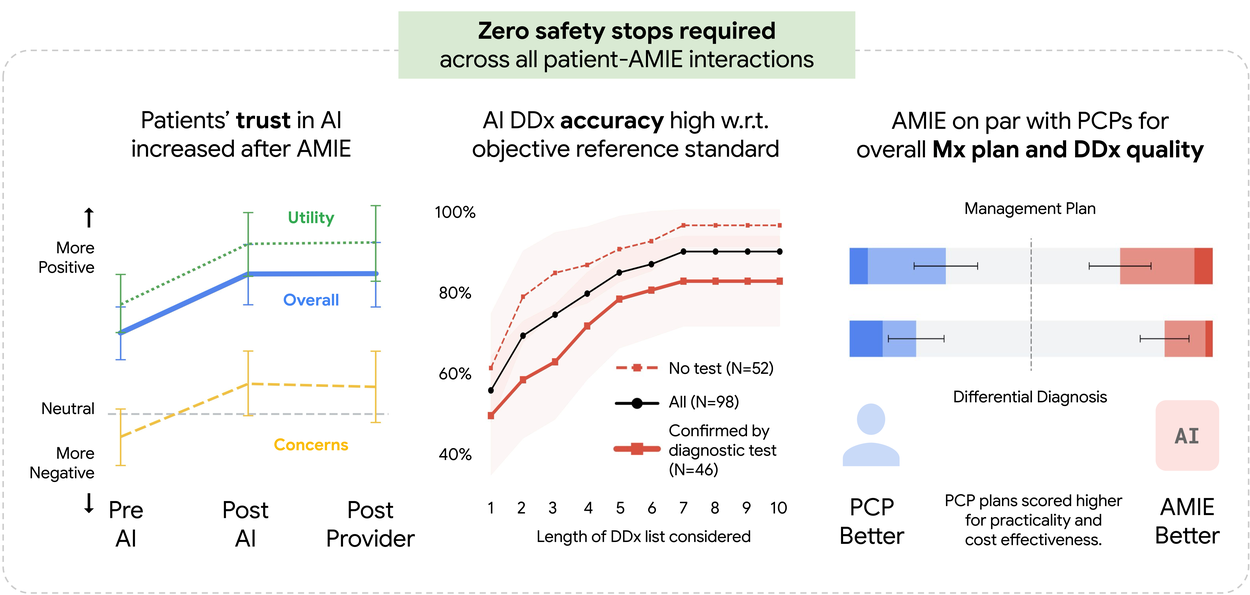
Diagnosis. The final diagnosis was on AMIE’s list in 90% of cases, in its top three in 75% and its first choice in 56%. There was no significant difference between AMIE and doctors in the quality of diagnosis lists or in how appropriate and safe the management plans were.
Help for doctors. Across 44 responses from doctors who had read the transcript, AMIE helped them prepare in 33 cases (75%) and might have changed their approach in 25.
Through patients’ eyes. Clinical evaluators rated conversation quality favourably in 87 to 100% of cases across 17 criteria; patients rated it favourably in 48 to 96% across 16 criteria. Patients’ attitudes toward AI improved after talking to AMIE and stayed higher after the doctor visit.
Where it needs to improve
The study is upfront about gaps. Doctors’ management plans scored higher on practicality and cost-effectiveness; Google attributes this to AMIE having no access to health records, no physical exam and text only. Supervising physicians noted one hallucination and added clinical information in five chats. It is a single-centre, text-only feasibility study with no control group, so it makes no claim that AMIE improves outcomes. Participants were younger than the centre’s overall patient mix.
What comes next
Google has announced the next step: a nationwide randomized study in the US, plus voice and video consultations. The last author, Adam Rodman, works at both Google Research and BIDMC; Alphabet funded the study.
The direction is clear even at this research stage: AI can be a preparation assistant that strengthens the doctor’s hand, with the doctor making the call.
Sources: The Lancet paper, PubMed abstract, Google Research blog, Google announcement, Nature 2025, Nationwide study

