Rerun gives you AI coworkers that work while you sleep, open source and free to self-host
Rerun, built by Reunit, lets you set up AI coworkers with their own memory and computer that run scheduled tasks and ask before important steps. It is AGPL-3.0 and free to self-host with unlimited users.

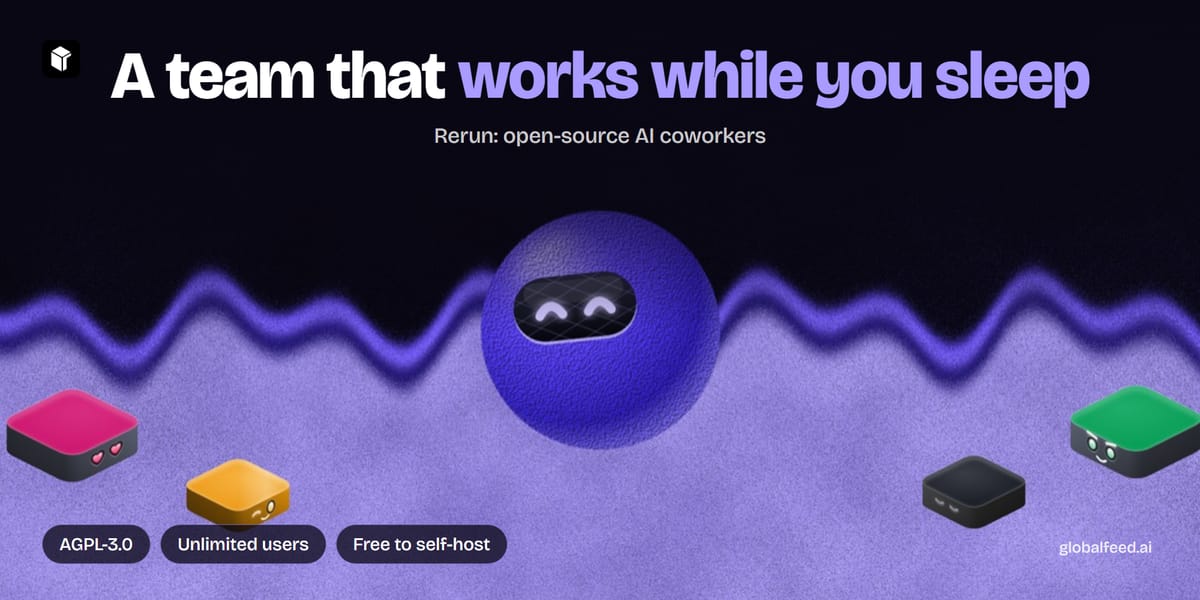
Picture walking into work in the morning: overnight, one AI assistant has sorted your inbox, another has put competitor prices into a sheet, and a third has drafted social posts and left them for your approval. Rerun, built by Luxembourg-based Reunit SA, promises exactly that: a platform where you set up and run AI “coworkers”. The team has published the code on GitHub under AGPL-3.0, and when you host it yourself it is free with unlimited users.
What an AI coworker is
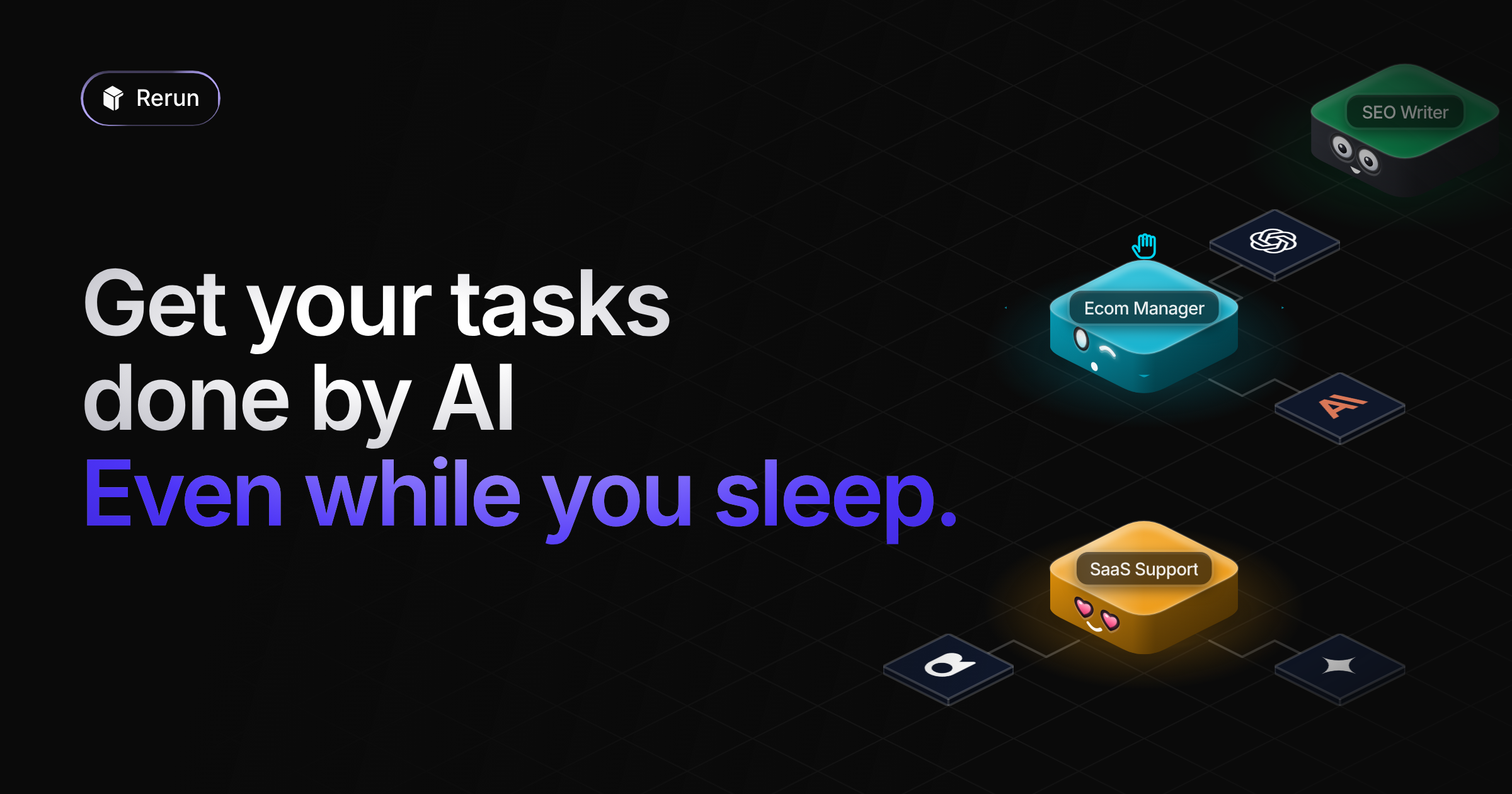
In recent months the big labs have all shipped this kind of product: OpenAI introduced “Dots” inside ChatGPT, Anthropic launched “Claude Duet” and xAI released “Grok Bot”. The shared idea: instead of one-off questions in a chat window, an AI worker with its own computer, memory and task list that keeps working while you are away. You message it like a colleague, it works through its schedule and asks you before important steps. Rerun is the open-source, self-hostable take on that idea.
How Rerun works
According to the project page, everything starts with a guide agent called the Foreman. You describe what you need in plain words, or out loud; the Foreman asks a few questions, plans a team and sets up the coworkers. Each one gets its own job, memory, skills and computer: you can watch its browser and screen live and take over whenever you want.
- One board: every coworker and its work on one screen.
- Chat: files, voice notes and tables, with approvals right in the conversation.
- Schedules: tasks like “prepare the report every morning at 7” run without you, and webhooks can trigger work too.
- Teamwork: coworkers can hand work to each other.
- Connections: 200+ ready integrations, any MCP server, and 2,000+ apps through Composio, including Gmail, Calendar, Drive, Slack, Notion, HubSpot, Stripe and GitHub.
- Approval rule: coworkers stop and ask before they send, pay or delete anything.
Ready-made templates help you start: executive assistant, data analyst, reputation manager, sales development rep, social media manager and collections specialist.

Which models it uses
Rerun works with your own API keys (Anthropic, OpenAI, Gemini, OpenRouter). Its standout feature is that it can also run on your existing Claude and ChatGPT subscriptions. Per the self-hosting docs, the runtime ships the Claude Code and Codex command-line tools, and the connection uses those tools’ own sign-in screen. That way the subscription you already use can power your new team.
Hosting it yourself
The open-source edition runs the same code as the hosted one. The docs list Git, Node 22, Docker Compose, at least 6 GB of memory for Docker and about 60 GB of free disk; the database is Supabase, which can also run on your own machine. In short: clone the repo, copy the example settings file, run the setup check script to generate secrets, prepare the database and start everything with Docker Compose. Then open port 3000 in your browser and say hi to the Foreman. The docs also remind server installs to close the relevant ports at the firewall.
The hosted Rerun Cloud is listed on the pricing page as of 3 November 2026 at $29 a month for Pro after a 5-day trial, also with unlimited users. Cloud adds features such as LinkedIn, WhatsApp and email, a template library and support. Per the privacy page, content from self-hosted installs never reaches Rerun.
What the license allows
AGPL-3.0 is an Open Source Initiative approved license. You can install, use and modify Rerun inside your company for free; if you let others use a modified version over a network, you need to share your changes under the same license. The name and logo are kept outside the license.
Who it is for
The project is off to a fast start: the repo opened on 29 October, the first releases shipped on 2 November and it quickly gathered hundreds of stars. The team says a mobile app is coming this week. It is worth a try for small teams that want to hand repetitive office work to AI, agencies running social media and reporting, or companies that want to keep their data on their own servers. The best start is one template and one small task, then growing the team step by step.
Sources: Rerun on GitHub, Rerun website, Self-hosting docs, Pricing, Privacy